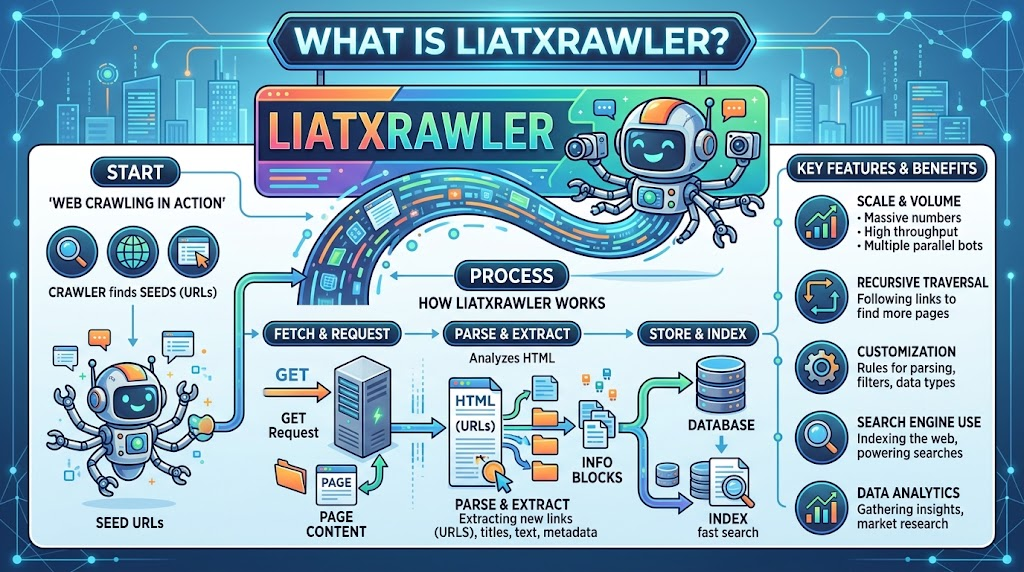
Have you ever wondered how search engines find information so fast? The secret lies in automated helpers that roam the internet day and night. A Liatxrawler is a specialized tool designed to explore web pages and gather useful information. Think of it like a friendly digital robot that reads websites so you do not have to do it all by yourself. When you search for a favorite topic online, these systems have already visited the pages to make sure everything is neat and organized. People who manage online blogs and digital publishing workflows use these tools every single day to keep their sites running smoothly. Understanding how a liatxrawler functions helps us see the hidden magic behind our daily web browsing habits.
What Is a Liatxrawler and Why Do We Need It?
A liatxrawler is a modern software program built to collect data from different websites. Unlike older tools that simply copy plain text, a smart liatxrawler uses advanced technology to understand the real meaning behind web pages. Imagine walking into a massive library with millions of books. Without a catalog, finding a single book would take forever. A liatxrawler acts like an super-fast librarian that walks down every aisle, reads the titles, and makes a giant map of where everything lives. This process makes sure that internet users can discover fresh and accurate content within seconds.
How Traditional Web Scraping Has Changed Over Time
In the early days of the internet, gathering online data was messy and slow. Old programs followed rigid rules and often broke whenever a website changed its design. Today, a advanced liatxrawler brings a much smarter approach to the table. These new systems adapt to modern web layouts that feature complex design elements and fast-moving graphics. When creators build online platforms, they want systems that can keep up with rapid updates. By using a liatxrawler, technical teams save countless hours of manual work and avoid the frustration of fixing broken scripts every single week.
Exploring the Core Features of a Smart Crawler
Every good liatxrawler comes packed with helpful features that make data collection smooth. One major feature is adaptive scheduling, which lets the tool check busy websites more often while leaving quiet sites alone. Another great feature is smart rate-limiting, which ensures the tool never overwhelms a web server. When a liatxrawler visits a site, it politely asks for information without slowing down the page for other human visitors. These built-in safety rules protect website owners and keep the internet running at a happy, steady pace.
Why Context and Meaning Matter So Much Online
Computers used to struggle with human language because they only looked for exact matching words. A modern liatxrawler changes that by using natural language processing to understand context. If a page talks about apples the fruit or Apple the technology company, a smart liatxrawler can figure out the difference based on the surrounding sentences. This deep understanding helps deliver much better search results for everyday users. When content is properly understood, readers find the exact answers they need without sorting through confusing or unrelated pages.
Practical Uses for Businesses and Content Creators
Many different industries rely heavily on a liatxrawler to make smart choices. Marketing professionals use a liatxrawler to check competitor pricing and see what topics are trending online. Online store managers use these tools to track product availability across multiple digital shops. Even researchers use a liatxrawler to gather public data for academic studies. Having quick access to organized information allows growing businesses to plan their next big ideas with confidence and clarity.
Staying Safe and Respecting Website Rules
Even though a liatxrawler is powerful, it must always follow polite internet rules. Every website has a special file called robots.txt that tells visitor bots which areas are open and which areas are private. A trustworthy liatxrawler always reads this file first and respects the boundaries set by website owners. Ethical data collection means balancing the need for information with deep respect for digital privacy. Following these simple guidelines ensures that the web remains a safe, fair, and open space for everyone.
Making Sense of Complex Data Structures
Websites come in all shapes and sizes, featuring pictures, videos, and dynamic menus. A traditional scraper often fails when it hits a page that loads content dynamically. However, a robust liatxrawler handles these tricky layouts with ease by simulating real browser behavior. When a liatxrawler processes a modern page, it looks at the final rendered view rather than just the raw code. This advanced capability ensures that no valuable piece of information gets left behind during a scan.
The Future of Automated Web Discovery
As technology keeps growing, the capabilities of a liatxrawler will only get better. Developers are constantly training these systems to be faster, lighter, and more accurate. We can expect future versions of a liatxrawler to handle even larger amounts of digital content while using less computer power. For anyone working in the digital space, staying updated on these tools is an exciting way to watch the evolution of the internet unfold right before our eyes.
Complete Comparison and Detailing Table
| Feature / Aspect | Traditional Web Scraper | Modern Liatxrawler System |
| Primary Technology | Static scripts and basic regex matching | Machine learning and natural language processing |
| Handling Dynamic Content | Struggles with JavaScript and infinite scrolls | Uses headless browser rendering for full visibility |
| Maintenance Needs | Requires frequent manual updates when layouts change | Adapts automatically to shifting website architectures |
| Server Etiquette | Often ignores rate limits, risking server slowdowns | Applies smart rate-limiting to protect host servers |
| Contextual Awareness | Matches raw keywords without understanding meaning | Interprets true context, intent, and semantic meaning |
Frequently Asked Questions
What is a liatxrawler in simple terms?
A liatxrawler is an automated software tool that browses the internet to read, collect, and organize web page data for users and search systems.
How does a liatxrawler differ from old scrapers?
Older scrapers only copy raw text using strict rules, while a modern liatxrawler uses artificial intelligence to understand context and adapt to design changes.
Is using a liatxrawler safe for websites?
Yes, when configured correctly, a responsible liatxrawler follows site rules and rate limits to ensure website servers stay healthy and operational.
Who typically uses these crawling tools?
Marketing experts, SEO specialists, business analysts, and content aggregators use a liatxrawler to gather market insights and organize digital content.
Can a liatxrawler read JavaScript pages?
Yes, advanced systems use simulated browser environments to process modern web pages that load content dynamically.
How do I get started with data collection?
Begin by defining your specific data needs, selecting a reliable crawling framework, and always respecting website robots.txt files.
Conclusion
Understanding how a liatxrawler works gives you a clear window into how the modern internet organizes its infinite sea of information. By combining smart machine learning with respectful crawling habits, these tools make digital research faster and easier for everyone. Whether you are managing a growing website or exploring new tech trends, keeping up with data collection innovations is a great way to stay ahead. Try exploring these concepts further in your own digital projects today!