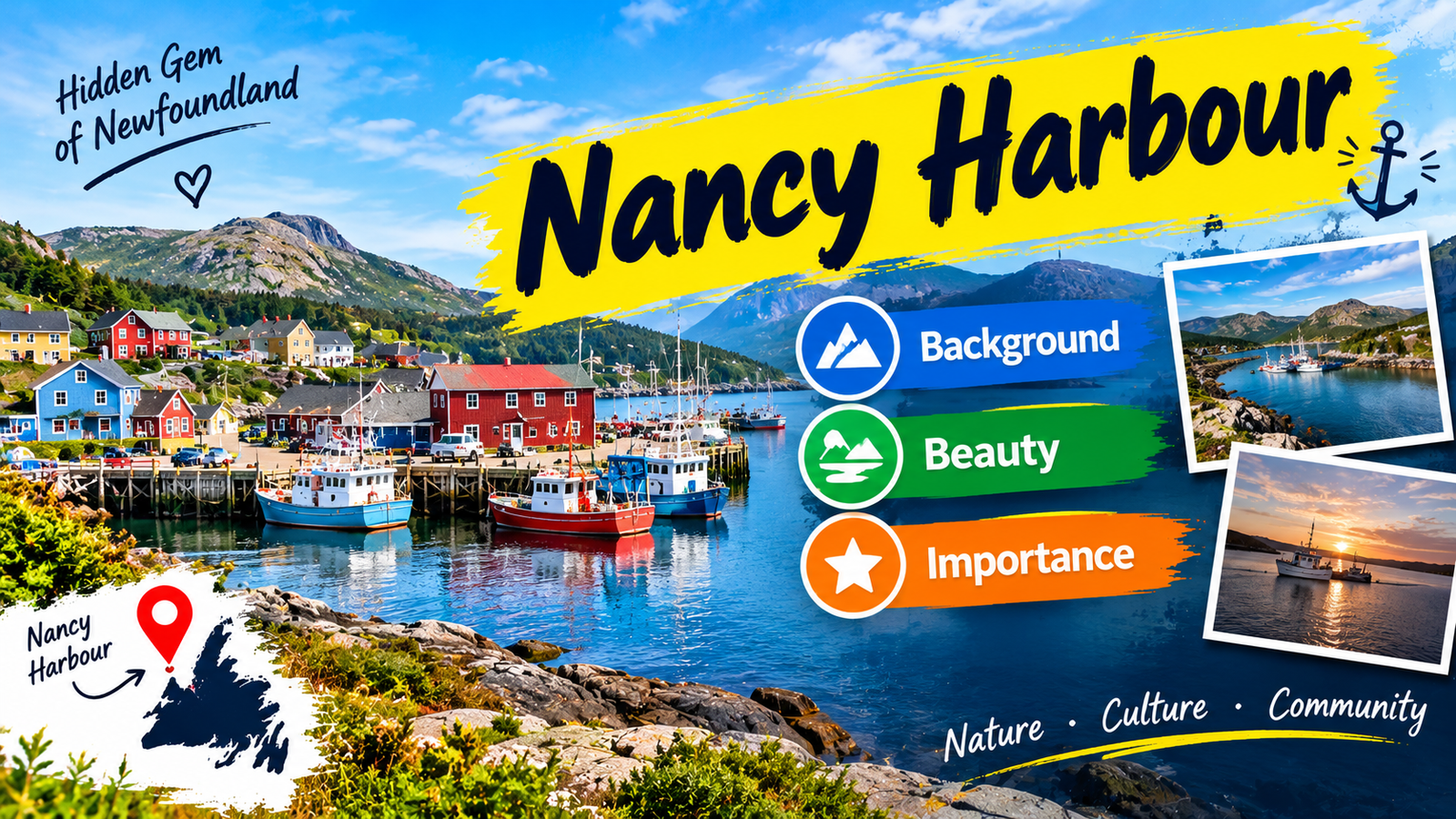
Introduction to Nancy Harbour
Nancy Harbour is a keyword that may refer to a harbour, a coastal destination, a geographical location, or a place associated with maritime activities. Harbours have played an important role in human civilization for centuries, providing safe spaces for boats and ships, supporting trade, and connecting communities across different regions. Understanding a place identified as Nancy Harbour requires looking at its geographical setting, history, natural environment, and potential significance for local communities and visitors.
Whether you are researching Nancy Harbour for educational purposes, travel planning, geographical information, or online content, it is important to understand the wider role that harbours play in coastal life. This article explores the possible significance of Nancy Harbour, the characteristics associated with harbours, and the environmental, economic, and recreational factors that make such locations valuable.
Note: The exact geographical identity of Nancy Harbour is not confirmed here. The following article discusses the keyword in a general harbour-related context rather than presenting unverified details about a specific location.
What Is Nancy Harbour?
Nancy Harbour is the main keyword explored in this article. To understand its potential meaning, it is useful to begin with the general definition of a harbour. A harbour is a sheltered area of water where ships, boats, and other vessels can anchor safely. Natural land formations or artificial structures may protect harbours from strong waves, currents, and adverse weather conditions.
A harbour can serve several purposes, including transportation, fishing, commercial shipping, tourism, and recreational boating. Depending on its location and development, it may be a small coastal facility serving a local community or a large port supporting international trade.
When researching Nancy Harbour, identifying its country, nearest city, and geographical coordinates would help establish whether it is an officially recognized place, a local landmark, or a name used in a particular community.
Geographical Location and Surroundings
The geographical location of a harbour determines many of its characteristics. Coastal harbours are often situated near bays, estuaries, rivers, islands, or naturally sheltered stretches of shoreline. These environments can provide suitable conditions for vessels and create habitats for a variety of marine organisms.
If Nancy Harbour refers to a particular coastal destination, its geographical surroundings would be important for understanding accessibility, climate, nearby settlements, and local attractions.
Researchers commonly examine several factors when studying a harbour’s location:
- Coastal geography: The shape of the shoreline and the depth of surrounding water.
- Accessibility: The roads, walking routes, waterways, or transport connections leading to the area.
- Nearby communities: Residential areas, fishing villages, towns, and commercial districts.
- Natural features: Beaches, cliffs, wetlands, islands, and marine habitats.
- Weather conditions: Seasonal rainfall, wind patterns, tides, and sea conditions.
These details help explain why a harbour develops in a particular location and how people use it.
Historical Background of Harbours
Harbours have been central to the development of societies throughout history. Ancient communities established coastal settlements near protected waters because these locations made fishing, transportation, and trade easier. Over time, many small harbours developed into busy commercial centers.
Historically, harbours provided places where merchants exchanged goods, sailors obtained supplies, and fishing communities brought their daily catches ashore. They also helped connect distant regions by creating reliable points for maritime travel.
The history of any specific place called Nancy Harbour would need to be researched through historical maps, local archives, official geographical records, and community accounts. Such sources could reveal when the location was first identified, how its name originated, and whether it played a role in regional transportation or commerce.
Understanding this historical context can help explain how a harbour contributes to the identity of its surrounding community.
Natural Beauty and Coastal Environment
One of the most appealing features of many harbours is their natural environment. Sheltered water, changing tides, coastal vegetation, and views across the sea can create attractive landscapes for residents and visitors.
Depending on its actual setting, Nancy Harbour may be worth researching for natural features such as waterfront scenery, nearby beaches, marine wildlife, or coastal walking routes. However, these attractions should be confirmed through reliable local sources before being associated with a specific location.
Coastal environments are also ecologically important. They may support fish, shellfish, seabirds, aquatic plants, and other wildlife. Estuaries and wetlands near some harbours provide feeding and breeding grounds for numerous species.
Protecting these habitats is essential because coastal development, pollution, excessive fishing, and climate change can threaten sensitive ecosystems. Responsible management helps maintain the environmental quality that makes harbour areas valuable.
Economic Importance of Nancy Harbour
Harbours can make significant contributions to local and regional economies. Their economic importance depends on their size, location, infrastructure, and primary activities.
Commercial harbours may support shipping, cargo handling, warehousing, and transportation. Smaller harbours may focus on fishing, local passenger services, boat maintenance, and tourism.
If Nancy Harbour is an established maritime location, its economic role could be assessed by examining the activities carried out there and the number of businesses that depend on the waterfront.
Common economic benefits associated with harbours include:
- Creating employment in fishing, transport, maintenance, and hospitality.
- Supporting local markets and seafood businesses.
- Connecting coastal communities with other commercial centers.
- Providing facilities for recreational boating and tourism.
- Encouraging investment in nearby infrastructure and services.
These activities can help sustain local livelihoods and support the development of surrounding communities.
Tourism and Recreational Activities
Harbours are often popular destinations for visitors who enjoy coastal scenery, maritime history, and outdoor recreation. Depending on local facilities and regulations, activities may include walking along the waterfront, photography, fishing, sightseeing, boating, and observing marine wildlife.
For someone planning to visit Nancy Harbour, the first step should be confirming the exact location. Once identified, visitors can investigate nearby accommodation, restaurants, public transport, parking facilities, and attractions.
A well-planned harbour visit should also take account of local weather, tides, safety notices, and access restrictions. Working harbours can contain heavy equipment, moving vehicles, and restricted operational areas, so visitors should follow posted guidance.
Tourism can benefit local communities when it supports local businesses while respecting residents, wildlife, and the working environment.
Marine Life and Biodiversity
Marine biodiversity is an important consideration when studying coastal areas. Harbours can provide habitats for different species, although the amount and variety of wildlife depend on water quality, habitat structure, human activity, and the surrounding ecosystem.
Fish may use sheltered waters for feeding or protection. Seabirds may gather around areas where food is available, while shellfish and other small organisms can inhabit suitable underwater surfaces.
Not every harbour offers the same opportunities for wildlife observation. Some are heavily developed commercial facilities, while others are surrounded by relatively natural coastlines.
Protecting marine biodiversity requires responsible waste disposal, careful management of fishing activities, and measures to prevent fuel or chemical spills. Visitors can contribute by avoiding disturbance to wildlife and keeping rubbish away from the water.
Environmental Challenges and Conservation
Coastal environments face a variety of environmental challenges. Harbours can be affected by plastic waste, sewage contamination, industrial pollution, sediment accumulation, and damage to nearby habitats.
Climate change presents additional concerns, including rising sea levels, stronger coastal flooding risks in some regions, and changing marine ecosystems. These issues may affect harbour infrastructure, navigation, and the communities that rely on coastal resources.
Effective environmental management can include regular water-quality monitoring, improved waste collection, sustainable fishing practices, habitat restoration, and infrastructure designed to withstand changing coastal conditions.
If Nancy Harbour is a real and identifiable location, local environmental reports would be useful for understanding which conservation measures are currently in place.
Community participation is also valuable. Residents, businesses, visitors, and public authorities can work together to reduce pollution and preserve coastal environments for future generations.
Transportation and Accessibility
Transportation is another important factor in the usefulness of a harbour. Larger facilities may connect road, rail, and maritime transport networks, while smaller coastal locations may primarily serve local boat users and nearby residents.
Accessibility influences the movement of people, goods, equipment, and supplies. Good transport connections can help businesses operate efficiently and make recreational destinations easier to visit.
For Nancy Harbour, accurate information about access would depend on identifying its location. Useful details to research include the nearest town, available roads, public transportation, pedestrian access, parking, and any restrictions affecting visitors.
People planning a journey should rely on current maps and official local information rather than assuming that a place has public access or visitor facilities.
Why Nancy Harbour May Be Worth Researching
The keyword Nancy Harbour may be relevant to several types of research. Students might use it for a geographical assignment, travelers might be looking for a destination, and writers might be preparing an informational article.
Researching a place by name can reveal useful information about its location, cultural associations, natural features, and economic significance. However, the accuracy of the results depends on distinguishing confirmed facts from assumptions.
To develop a more detailed profile of Nancy Harbour, researchers should look for official place-name databases, regional maps, tourism websites, maritime records, and local historical publications.
Searches may also benefit from adding a country, state, nearby city, or related term. For example, combining the name with words such as location, history, tourism, map, or coastal area can help narrow down the intended subject.
Tips for Finding Accurate Information About Nancy Harbour
Finding reliable information begins with confirming the identity of the place. Similar names can refer to different locations, and some local landmarks may not appear in major geographical databases.
Consider these research steps:
- Search the exact phrase “Nancy Harbour” using a reputable search engine.
- Check maps and official geographical records for a matching location.
- Identify the country and nearest settlement.
- Consult official tourism or local government websites where available.
- Compare historical and geographical details across multiple trustworthy sources.
- Verify opening hours, transport information, and access conditions before planning a visit.
- Avoid publishing claims about local attractions, history, or facilities without supporting evidence.
Following these steps can improve the quality of an article and help readers distinguish verified information from general descriptions.
The Future of Coastal Harbours
The future of harbours will depend on how effectively communities balance economic development, transportation needs, environmental protection, and climate resilience.
Modern harbour management increasingly considers efficient infrastructure, cleaner operations, improved waste handling, and the protection of surrounding marine habitats. In some locations, digital navigation systems and improved monitoring technologies also help make maritime activities safer and more efficient.
Small harbours can benefit from community-led conservation and carefully managed tourism, while larger facilities may need extensive planning to address shipping demands and environmental impacts.
If Nancy Harbour is an established location, its future prospects would depend on its specific economic role, environmental conditions, infrastructure, and local development plans.
Conclusion
Nancy Harbour is a keyword that requires further geographical identification before specific facts about its location, history, or attractions can be confirmed. Nevertheless, studying the broader role of harbours provides a useful starting point for understanding their importance to coastal communities.
Harbours can support transportation, fishing, trade, tourism, employment, and marine biodiversity. They may also serve as important cultural landmarks that connect communities with their maritime history.
For anyone researching Nancy Harbour, the most important step is to establish exactly which place the name refers to. Official maps, geographical databases, local records, and reliable tourism resources can help confirm its identity and provide the evidence needed for a more detailed article.
By combining accurate research with an understanding of coastal environments and maritime activities, readers can develop a clearer picture of the significance of Nancy Harbour and its possible place within the wider world of harbours and coastal destinations.