Introduction
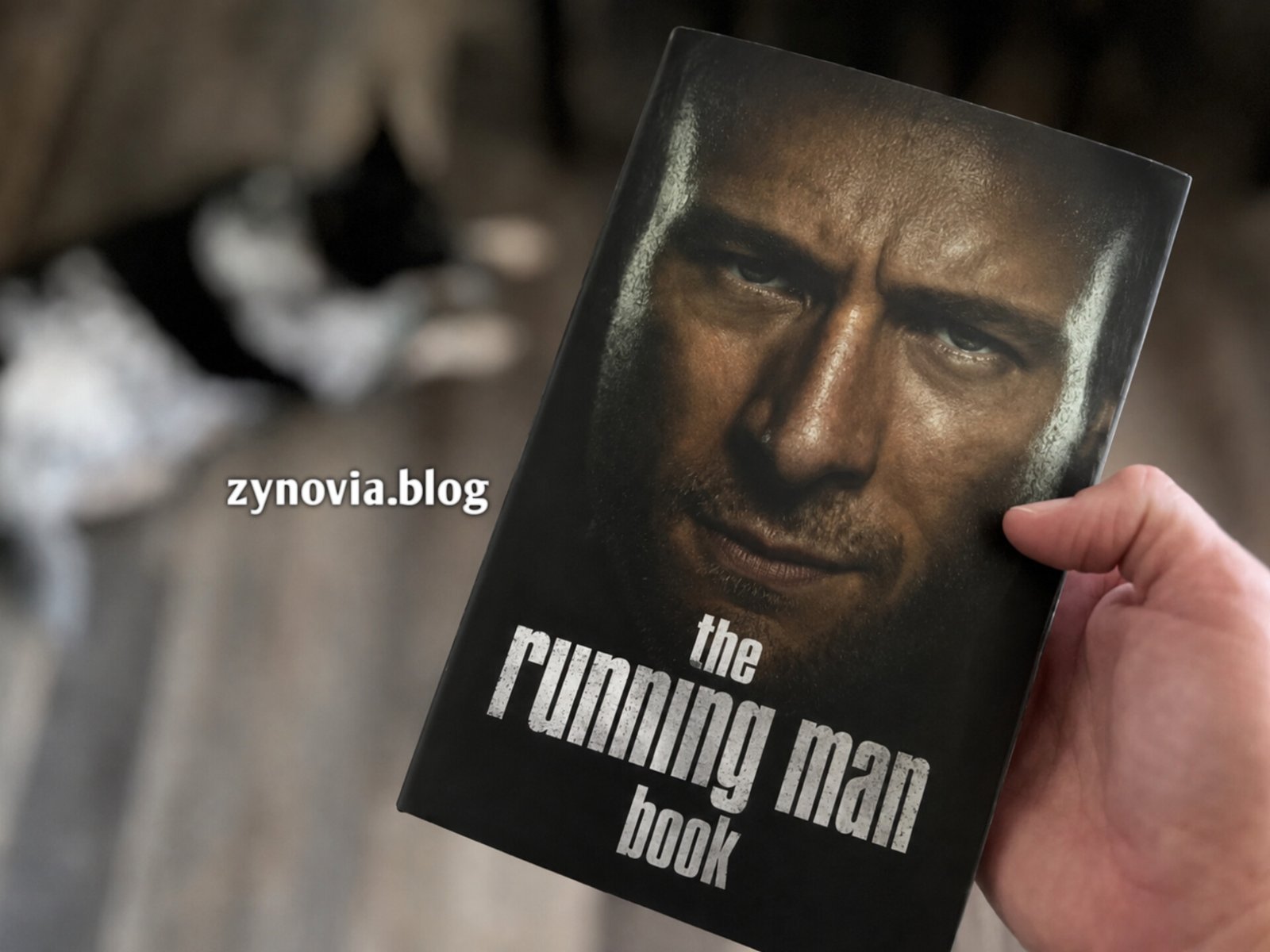
The Running Man book remains one of the most influential dystopian thrillers ever written. Published in 1982 under Stephen King’s pen name, Richard Bachman, the novel presents a frightening vision of a future where entertainment, politics, and corporate power blend into a deadly game.
Although many readers recognize The Running Man because of the 1987 action film starring Arnold Schwarzenegger, the original novel tells a much darker, more thought-provoking story. Rather than focusing on explosive action, the book explores poverty, media manipulation, social inequality, and the lengths ordinary people will go to protect those they love.
Whether you’re considering reading the novel for the first time or want to understand why it still attracts attention decades later, this guide covers everything you need to know.
What Is The Running Man Book About?
The Running Man follows Ben Richards, an unemployed father living in a bleak future America. Society is controlled by a massive television network known as the Games Network, where violent reality shows entertain millions of viewers.
Richards’ young daughter is seriously ill, and his family cannot afford medical treatment. Desperate for money, he volunteers for the network’s most dangerous television program: The Running Man.
The rules appear simple.
Ben receives a small head start before professional hunters begin tracking him across the country. Every citizen is encouraged to report sightings, making nearly everyone a potential enemy. The longer he survives, the more prize money his family earns.
Winning, however, has never truly been the goal of the game.
Who Wrote The Running Man?
The novel was written by Stephen King, although it originally appeared under his famous pen name, Richard Bachman.
King created the Bachman identity to publish additional books without overwhelming the market under his own name. During that period, readers believed Bachman was an entirely different author.
Eventually, King’s identity became public, and The Running Man was later republished under both names, making it one of the best-known Bachman novels.
Publication History
The novel first appeared in 1982 and quickly stood out because of its fast pacing and unsettling vision of the future.
Unlike many science fiction novels of its era, The Running Man focused less on futuristic technology and more on human behavior. It asked difficult questions about how television influences society and how governments can manipulate public opinion.
Those ideas have only become more relevant over time.
The Main Characters
Ben Richards
Ben Richards is an ordinary man forced into extraordinary circumstances.
He isn’t a trained soldier or superhero. Instead, he survives through intelligence, determination, and an unwillingness to surrender despite impossible odds.
His motivations feel realistic because every decision revolves around helping his family rather than becoming famous.
Sheila Richards
Sheila is Ben’s wife, who struggles to care for their sick daughter while living in extreme poverty.
Although her role is smaller, she represents the emotional stakes driving Ben throughout the story.
Amelia Williams
Amelia becomes one of the few people willing to help Ben during his escape. Her character adds another perspective on the oppressive society created by the Games Network.
The Hunters
The professional hunters employed by the Games Network represent the government’s overwhelming power.
They possess advanced technology, unlimited resources, and widespread public support, making Ben’s survival increasingly difficult.
The Plot Without Major Spoilers
The story begins in a future America suffering from economic collapse, pollution, unemployment, and widespread inequality.
Unable to find work, Ben Richards turns to the Games Network, where desperate people compete in deadly contests for prize money.
After qualifying for The Running Man, Ben receives money for every hour he remains alive.
The network expects contestants to die quickly.
Instead, Ben proves far more resourceful than anyone anticipated.
As he travels across the country, he exposes corruption, gains unexpected allies, and becomes a growing threat to the system itself.
The suspense builds steadily as the hunters close in.
Major Themes in The Running Man Book
Media Manipulation
One of the novel’s strongest themes is the influence of mass media.
The Games Network controls information, shapes public opinion, and turns human suffering into entertainment. Viewers rarely question what they are shown because television becomes their primary source of truth.
This idea feels surprisingly modern despite the book being written decades ago.
Economic Inequality
Ben enters the competition because poverty leaves him with no other options.
King contrasts wealthy elites with struggling families who lack access to healthcare, stable employment, and basic opportunities.
Rather than presenting poverty as background detail, the novel makes it central to every decision the characters make.
Government Control
The story also examines surveillance, censorship, and corporate influence over government institutions.
Citizens believe they are free, yet nearly every aspect of their lives is monitored or manipulated.
Survival
At its core, the novel is about survival.
Ben must constantly balance trust and caution while making impossible choices under relentless pressure.
His emotional resilience proves just as important as his physical endurance.
Why the Novel Still Feels Relevant
Many readers are surprised by how current the novel feels.
Reality television dominates modern entertainment. Social media often rewards controversy, and misinformation spreads rapidly online.
Although today’s world differs significantly from King’s fictional America, the novel raises questions about media influence, privacy, and public perception that continue to spark discussion.
That lasting relevance explains why new generations continue discovering the book.
Differences Between the Book and the Movie
Many people assume the novel closely matches the famous 1987 film.
In reality, the differences are significant.
Tone
The novel is much darker and more realistic.
The movie focuses heavily on action, humor, and memorable villains.
Story
The book follows Ben across the country while he hides from both hunters and ordinary citizens.
The film confines much of the action to a televised arena.
Themes
The novel explores political corruption, media manipulation, and poverty.
The movie emphasizes action and entertainment over social commentary.
Ending
Without revealing spoilers, the novel ends far more dramatically than the film and leaves readers with a powerful emotional impact.
Writing Style
Stephen King’s writing in The Running Man is concise and fast-moving.
Short chapters create constant momentum, while brief descriptions allow readers to imagine the world without slowing the pace.
Dialogue feels natural, and tension rarely disappears for long.
The result is a thriller that many readers finish within only a few sittings.
Who Should Read The Running Man?
This novel is an excellent choice for readers who enjoy:
Dystopian fiction
Political thrillers
Fast-paced suspense novels
Psychological survival stories
Science fiction grounded in social issues
Classic Stephen King books
Readers expecting traditional horror may be surprised. While suspense runs throughout the story, psychological tension replaces supernatural scares.
Is The Running Man Better Than the Movie?
The answer depends on personal preference.
Readers looking for thoughtful social commentary generally prefer the novel because of its richer world-building and deeper themes.
Fans seeking nonstop action may enjoy the film more, although many appreciate both versions for different reasons.
Rather than competing directly, they offer two distinct interpretations of the same concept.
Why The Running Man Continues to Influence Popular Culture
The novel helped shape many later stories featuring deadly competitions and oppressive governments.
Modern books, films, and television series often explore similar ideas, including survival contests, media spectacle, and authoritarian control.
Although each work takes a different approach, King’s novel remains one of the earliest and most influential examples of this storytelling style.
Its impact continues to be recognized by readers, writers, and critics alike.
Tips Before Reading
If you’re planning to read The Running Man, keep these suggestions in mind:
Expect a darker story than the movie adaptation.
Pay attention to the social commentary as much as the action.
Notice how ordinary people react to media influence.
Read it as both a thriller and a political satire.
Avoid spoilers if possible, as the ending is one of the novel’s greatest strengths.
Conclusion
The Running Man book is much more than a suspenseful chase story. It combines thrilling action with meaningful commentary about media influence, inequality, and the dangers of unchecked power. Ben Richards’ desperate fight for survival keeps readers engaged, while the novel’s deeper themes encourage reflection long after the final page.
More than forty years after its original publication, The Running Man continues to feel remarkably relevant. Whether you’re a longtime Stephen King fan or someone exploring dystopian fiction for the first time, this novel offers an unforgettable reading experience that balances entertainment with thought-provoking ideas.
Visit also : zynovia.blog
Is The Running Man book based on the movie?
No. The movie is based on the novel, but it changes many characters, plot points, themes, and the ending.
Who wrote The Running Man?
Stephen King wrote the novel under the pen name Richard Bachman.
Is The Running Man a horror novel?
Not in the traditional sense. It is primarily a dystopian science fiction thriller with psychological suspense.
Is the book suitable for teenagers?
The novel contains violence, mature themes, and strong language. Older teens and adults are generally the most appropriate audience.
Why is The Running Man considered a classic?
Its compelling story, memorable protagonist, social commentary, and lasting relevance have helped it remain popular for decades.
How long is The Running Man book?
Most editions contain approximately 200–250 pages, depending on the publisher and formatting.